Chabahar Port's capacity should be utilized to replace trade route in south
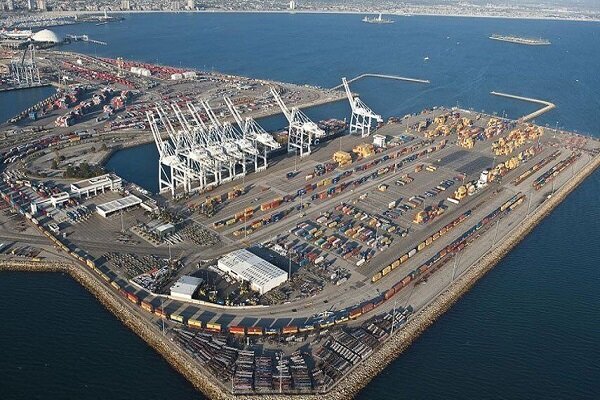
TEHRAN- An expert in global markets has stated that under current circumstances, due to the blockade in the south, the existing capacities of Chabahar Port, northern ports, and rail routes to Central Asian countries can be utilized for trade.
Keyvan Jafari Tehrani said in an interview with ISNA: "The closure of the Strait of Hormuz has had a major impact on bulk carriers. Regarding grain carriers, previously imports arrived at Imam Khomeini Port, but now they are mostly being handled through Chabahar Port. Export shipments are also being loaded in small quantities at Bandar Abbas, involving Iranian vessels and some Chinese ships. However, I do not know exactly whether these ships can pass through the American blockade, but we are seeing them being loaded."
Emphasizing that Iran's export capacity exists through Chabahar Port under the current siege, he continued: "The US is positioned in the Gulf of Oman, from the area of Sohar Port on the Omani side to the opposite point on the Iranian coast near Minab. The width of this point, the mouth of this distance, from the Omani coast to Iran is 280 nautical miles. While the Strait of Hormuz is 22 nautical miles wide and under Iran's control, the US controls 280 nautical miles. Fortunately, Chabahar Port lies outside this zone and has import and export capacity. However, Chabahar Port is 75 kilometers by air from Pakistan's Gwadar Port, and Pakistan has recently allowed the passage of import container shipments to Iran by unloading at Pakistani ports and transporting them via the land border."
Jafari Tehrani added: "Interestingly, even though Chabahar Port is not within the American blockade zone, some ship owners are currently reluctant to pass through it or load cargo due to uncertainty. Still, I believe Chabahar Port has good potential for export shipments to India and China, both of which have good relations with Iran."
Referring to some challenges that have arisen for production in regional countries and Iran during the recent war, this global markets expert stated: "The events related to the war led to Iran targeting the aluminum industry of Persian Gulf countries, which affected aluminum production in those countries, because one-fifth of the world's aluminum is produced by Persian Gulf countries, especially the UAE and Bahrain. Additionally, the import of aluminum raw materials such as alumina became limited or halted, and these plants even faced feedstock supply problems."
EF/MA
Leave a Comment